
Virtualization 101: How Virtual Environments Power the Modern Digital World
The entire global economy runs on an invisible technology layer. Every time you stream a movie, swipe a credit card, check a mobile banking application, or send an instant message to a colleague across the world, you are interacting with this unseen system. To the untrained eye, it appears that these digital services run directly on physical computers stacked inside massive data warehouses.
In reality, they exist in a highly adaptable, software-defined space powered by a process known as Virtualization.
If you are looking to break into the tech industry—whether you are aiming for a career in cloud architecture, systems security, or DevOps engineering—virtualization is the absolute bedrock concept you must master. It is the core mechanism that makes modern cloud computing possible.
Without virtualization, tech giants like Amazon Web Services (AWS), Google Cloud, and Netflix could not exist.
For beginners entering the technology space from non-technical backgrounds, the concept of virtualization can sound like abstract science fiction. However, once you strip away the dense industry jargon, you will find a beautifully logical, highly practical trade skill.
Understanding how virtual environments operate is your definitive first step toward mastering enterprise infrastructure and building a high-growth career in the digital economy.
1. The Historical Crisis of Physical Hardware
To understand why virtualization is so revolutionary, we must first look at the massive technical and financial crisis that plagued the enterprise tech sector before this technology was invented.
Go back fifteen or twenty years. When a corporation wanted to deploy a new business application—such as an internal payroll system or a customer facing website—the IT department had to purchase a physical server. A server is essentially just a high-powered computer containing central processing units (CPUs), random-access memory (RAM) chips, network interfaces, and hard drives.
This traditional "one application per physical machine" model introduced three devastating operational bottlenecks:
Severe Resource Underutilization
A standard physical server is built with enough processing power to handle massive, unexpected traffic spikes. However, under normal daily operating conditions, that server rarely utilizes all of its power.
Statistically, traditional enterprise servers spent most of their operational lifespans running at less than 15% of their total computational capacity. The remaining 85% of the processing power, memory, and electricity was completely wasted, sitting idle while the company absorbed the ongoing utility bills.
Massive Financial Capital Overhead
If a business needed to run ten separate software applications securely, they had to purchase ten individual physical servers. This required enormous upfront financial investments.
Beyond the initial purchase cost of the hardware, the company had to build or rent dedicated server rooms, invest in massive industrial air conditioning units to prevent the machines from overheating, and pay continuous maintenance salaries to engineers to handle the physical infrastructure.
Extreme Operational Sluggishness
If a company's marketing team wanted to launch a new promotional website, they could not do it quickly. The IT team had to specify the hardware requirements, submit a purchase request to finance, wait weeks for the physical server to ship to the building, manually mount the machine into a metal equipment rack, run physical power and network cables, and manually install the operating system.
This manual infrastructure configuration process routinely dragged on for weeks or even months, severely crippling corporate innovation speeds.
2. Enter the Hypervisor: Software That Simulates Hardware
Virtualization completely shattered these physical limitations by introducing an intelligent software layer that sits directly between the physical computer hardware and the software applications. This magical piece of software is called a Hypervisor.
The hypervisor’s job is to act as an all-powerful traffic cop and illusionist. It takes the physical resources of a single, massive server—all of its raw CPU cores, physical RAM sticks, and storage drives—and slices them up into smaller, isolated, independent digital compartments.
Each of these digital compartments behaves exactly like a separate, standalone physical computer. We call these virtual compartments Virtual Machines (VMs).
Inside a single physical server chassis sitting in a data center, a hypervisor can create dozens of separate virtual machines simultaneously.
One VM can run the Linux operating system to power the corporate website. A second VM can run Windows Server to manage internal employee email databases. A third VM can run a specialized security operating system to monitor network traffic.
The hypervisor performs a continuous double-sided trick:
- To the underlying physical hardware: The hypervisor looks like a single, highly efficient master application that utilizes 100% of the machine's processing power, completely eliminating idle resource waste.
- To the virtual machines inside: The hypervisor creates a perfect illusion. Each virtual machine genuinely believes it is a real, physical computer. The operating system running inside the VM has no idea it is sharing a physical processor or memory chip with thirty other completely unrelated virtual environments.
3. The Core Superpowers of Virtual Environments
By transforming rigid physical hardware components into flexible, programmable software entities, virtualization grants enterprise infrastructure a set of incredible operational capabilities. These capabilities form the fundamental building blocks of modern cloud computing operations.
Total Architectural Isolation
Even though multiple virtual machines are sharing the exact same physical hardware components under the hood, they are completely isolated from one another by the hypervisor. This isolation is a massive security and stability benefit.
If a hacker successfully breaches the operating system of Virtual Machine A, or if a severe software bug causes Virtual Machine A to experience a catastrophic system crash, the failure is completely trapped within that specific virtual box. Virtual Machine B, C, and D continue running smoothly without a single millisecond of operational disruption.
True Platform Agnosticism
Because the hypervisor completely abstracts the physical hardware away from the operating systems, virtual machines are incredibly fluid and portable. A virtual machine is fundamentally just a collection of text files and data images stored on a drive.
This means you can take a complex virtual server environment running on a physical computer in a London data center, copy the files over the internet, and launch it instantly on a completely different physical computer brand inside a New York data center. The virtual environment will boot up and run perfectly without requiring any complex re-configuration.
Hardware Snapshotting and Rapid Recovery
Imagine you are a systems engineer tasked with deploying a massive, risky software update to a critical corporate database. In a physical environment, if the update fails and corrupts the system, you face hours of stressful manual recovery work to rebuild the server.
In a virtualized environment, you can use a feature called a Snapshot. Before running the software update, you tell the hypervisor to take a snapshot of the virtual machine. This creates an instant, exact digital backup of the server's entire operational memory and state at that precise microsecond.
If the software update goes horribly wrong and breaks the database, you do not panic. You simply click a button to restore the snapshot, and the hypervisor rolls the virtual machine back to its exact pre-update state within seconds.
4. How Virtualization Powers the Cloud
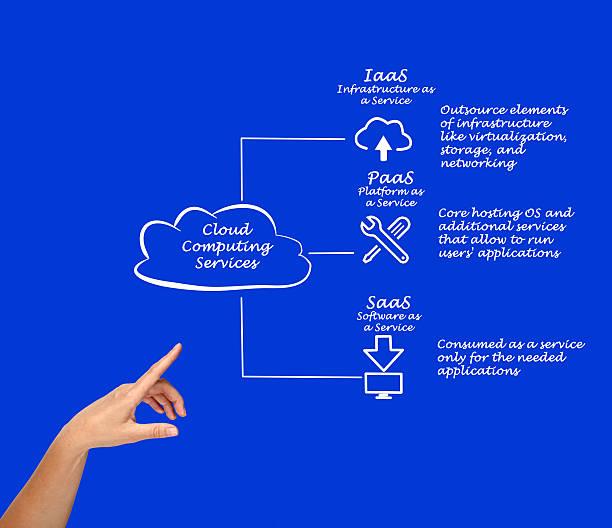
Many beginners struggle to understand the exact difference between virtualization and cloud computing. The easiest way to conceptualize the relationship is through a simple building analogy: Virtualization is the concrete engineering technology; Cloud Computing is the service business model built on top of it.
When tech hyper-scalers like Amazon Web Services or Google Cloud build their massive cloud platforms, they construct gigawatt-scale data centers filled with hundreds of thousands of physical server racks. They then deploy highly advanced, automated virtualization layers across this entire global hardware footprint.
Instead of making customers buy physical servers, the cloud providers use virtualization to sell virtual machine slices on demand over the internet.
When an independent software developer or a startup founder opens an AWS or Google Cloud dashboard and clicks a button to launch a new server, they are not buying physical machinery. The cloud provider's automated orchestration systems instantly communicate with a hypervisor inside one of their data centers, programmatically carve out a specific slice of CPU and RAM, wrap it inside a secure virtual machine container, and hand access to the developer over the internet in less than thirty seconds.
This on-demand, code-driven delivery of virtualized infrastructure is what makes the modern digital world so blindingly fast and scalable. It allows a tiny startup operating out of a garage to instantly access the same caliber of world-class, resilient computing power as an international fortune-500 bank, paying only a few cents per hour for the virtual resources they actively consume.
5. Building Practical Virtualization Literacy: The Key to Your Career
The technology market has reached a point of absolute clarity: if you want to build a career in tech, you must transition away from passive consumption and build deep, practical operational competence in virtualization and systems infrastructure.
Hiring managers at modern tech enterprises are completely indifferent to candidates who have merely memorized abstract definitions or multiple-choice trivia answers to collect generic, entry-level certificates.
The industry is facing a massive shortage of professionals who possess genuine, hands-on capabilities. Employers look for candidates who can open a text terminal, configure virtual network infrastructure, manage virtual machine resource allocations, write automation scripts, and troubleshoot real system errors under pressure.
True engineering confidence cannot be developed by watching videos or looking at abstract slideshow presentations. It must be actively forged by building systems, making configuration mistakes, diagnosing failures, and experiencing real-world technical environments.
The Konentra Framework: Master Infrastructure Through Experiential Simulation
Transforming absolute technology beginners into highly capable, infrastructure-proven engineering professionals is the primary mission of our training philosophy at Konentra Solutions.
We have completely discarded traditional, lecture-only educational models. We recognize that to truly master the core mechanics of virtualization, virtual environments, and cloud operations, you must actively step into the role of a working systems associate. This hands-on approach forms the absolute baseline of our immersive Systems Engineering and Cloud Architecture Training Tracks.
Our Integrated Career Readiness Pipeline
Our educational ecosystem is carefully engineered to guide you systematically from foundational core concepts straight to professional workplace competence:
- Pillar 1: Active Live Sandbox Labs: We place you directly inside active, live computing environments from your very first weeks. You will not work with simplified software mockups. Under the direct guidance of veteran enterprise engineers, you will personally install hypervisors, provision independent virtual machines, map out software-defined virtual networks, and manage granular system resources across multiple virtual environments.
- Pillar 2: Real-World Fault Diagnostics: True engineering capability is developed when systems break. Our instructional team deliberately injects realistic configuration errors, resource exhaustion bugs, and virtual network disconnects into your lab sandboxes. You will use real monitoring tools and systematic logic to troubleshoot, repair, and harden the infrastructure—exactly like a working professional.
- Pillar 3: The Konentra Managed Simulation Track: The definitive bridge to your technology career launch. You will step completely out of the student mindset and enter our immersive managed workspace simulation, executing the realistic daily tasks of an active infrastructure professional. You will collaborate on complex migrations, manage automated virtual deployments, and compile your engineering assets into a clean, public technical portfolio that serves as undeniable proof to global hiring managers that you possess the practical capabilities to add immediate value to their engineering teams from day one.
Stop letting a non-technical background hold you back from a high-growth, future-proof career in the digital economy. Master the foundational infrastructure workflows that power the modern digital world with confidence.
Rewrite Your Professional Trajectory
The global digital infrastructure is expanding at an exponential rate, and the organizations that power our modern world are looking for practical, competent professionals who can confidently manage, automate, and secure their virtual ecosystems. Equip yourself with the hands-on skills, code-driven portfolio documentation, and professional engineering mindset that will make you stand out in the global tech market.
To take your definitive first step toward mastering virtual environments, cloud operations, and establishing your long-term career security, explore our immersive training options and connect with a dedicated career readiness advisor at Konentra Solutions to secure your seat in our upcoming experiential cohort.
Recent Insights


Student Reviews
Authentic experiences and reviews from our global training alumni will be displayed right here shortly.
Global Cohort
Advance From Foundation To Technical Leadership
Secure your specialized path tracker in Cyber Analytics, Data Science, or Cloud Systems Engineering.
Join Training Track