
What Traditional Tech Degrees Leave Out: A Guide for Modern Graduates
Every year, thousands of university graduates throw their caps into the air, celebrating the completion of a four-year degree in Computer Science, Information Technology, or a related STEM field. For many, especially international students and career switchers, this moment represents the culmination of immense financial sacrifice, hundreds of hours of late-night studying, and the proud acquisition of a prestigious academic credential.
Yet, as the celebration fades and the job application process begins, an unsettling reality sets in. Graduates entry-level job portals only to find that the curriculum they spent years mastering does not align with what modern employers are asking for. They face technical screenings that feel completely foreign, behavioral interview questions they cannot answer, and job descriptions demanding familiarity with enterprise software platforms that were never once mentioned in a university lecture hall.
This is the hidden crisis in technology education: traditional tech degrees are leaving graduates fundamentally unready for the modern workforce.
University programs are excellent at teaching high-level theoretical concepts, historical computing architectures, and abstract mathematical algorithms. However, they are fundamentally structurally unaligned with the fast-paced, execution-oriented demands of the modern digital economy. Academic institutions focus on teaching you how to think like a researcher, but corporate hiring managers need to know if you can act like an infrastructure builder, a data interpreter, or a cyber defender on day one.
At Konentra Solutions, we recognize that your degree is not a failure—it is simply incomplete. We have positioned our platform as the ultimate post-graduate polishing school, designed to bridge the gap between academic theory and real-world enterprise execution.
This comprehensive guide takes an honest look at what traditional technology degrees leave out, why this educational gap exists, and how an experiential learning model can quickly transform you from a theoretical graduate into a highly competitive, job-ready technology professional.
The Structural Disconnect: Why Universities Stagnate While Tech Accelerates
To understand why a traditional degree leaves out so much crucial material, we must look at how the university model is built. Higher education institutions are not designed to adapt to rapid market changes; they are designed for permanence, deep research, and standardized accreditation. This creates a natural friction with the technology sector, which undergoes major structural shifts every few months.
1. The Bureaucracy of Curriculum Approval
At most major universities, updating a syllabus or introducing a new course is a multi-year administrative process. A proposal must go through departmental reviews, academic boards, budget committees, and external accreditation checks before a single lecture can be delivered.
By the time a professor receives permission to teach an updated course on cloud security, automated data visualization, or modern artificial intelligence workflows, the underlying software ecosystems, industry standards, and engineering best practices have already moved forward.
2. The "Publish or Perish" Academic Faculty Culture
University professors are highly intelligent researchers, but their professional success is measured by academic publications, research grants, and theoretical contributions—not by their proximity to modern corporate environments.
Many instructors have spent decades inside the university ecosystem, meaning they have never worked inside a modern Security Operations Center (SOC), managed an agile corporate infrastructure migration, or designed a live business intelligence pipeline for a corporate stakeholder. As a result, they teach technology as a static, historical text rather than a dynamic, operational trade.
3. The Linear Grading System vs. Chaotic Corporate Realities
In an academic setting, assignments are structured to have a single, clean, predictable answer. Code is graded based on whether it passes a specific test script; network diagrams are drawn on paper based on perfect, hypothetical conditions.
This creates a highly sanitized mental model of technology. Universities teach you to expect clean data and flawless environments. In reality, the corporate world is defined by chaos: messy datasets, legacy system dependencies, security vulnerabilities, and shifting client parameters. Traditional degrees completely omit the training required to navigate this operational friction.
The Four Crucial Pillars Traditional Tech Degrees Omit
When an entry-level graduate enters the job market, their lack of readiness usually stems from four distinct operational gaps that traditional higher education completely leaves out of the curriculum:
1. Direct Exposure to Enterprise Tooling Ecosystems
A computer science graduate can write an algorithm from scratch on a whiteboard, but they are often completely lost when dropped into a modern corporate software environment. Universities teach the foundational language but skip the modern tools used to manage that language at scale.
- In Cybersecurity: Graduates understand the mathematical theory behind encryption, but they don't know how to navigate an enterprise Security Information and Event Management (SIEM) dashboard to isolate a live network intrusion alert.
- In Data Analytics: Graduates understand statistical regression, but they have never built an interactive visual reporting dashboard that a corporate executive can use to make real-time financial decisions.
- In Cloud Engineering: Graduates understand the conceptual utility of virtualization, but they have never manually provisioned a scalable, multi-tier cloud network using real infrastructure-as-code platforms.
2. The Discipline of Professional Technical Documentation
In a university setting, the only documentation required is a simple lab report or comments within a source file, usually written solely for a professor to read.
In the corporate world, clear documentation is a critical business asset. Tech professionals must write formal incident response reports, project charters, compliance reviews, and system architecture schematics. They must be able to translate complex technical anomalies into clear, concise, and structured prose that non-technical business leaders can understand. Universities rarely teach this hybrid communication skill, leaving graduates struggling to articulate their value to corporate stakeholders.
3. Cross-Functional Collaborative Project Workflows
University group projects are notoriously mismatched with how real corporate teams operate. In a typical college project, tasks are split arbitrarily, communication happens over informal text channels, and there is no structured framework for tracking progress.
Modern tech companies run on highly organized project management methodologies, such as Agile and Scrum. Teams use tracking software to manage code integration, track resource allocation, map systemic dependencies, and clear development bottlenecks. Traditional degrees leave out this operational structure entirely, leaving graduates completely unfamiliar with how a real technical sprint functions.
4. Systemic Troubleshooting and Analytical Intuition
Because classroom exercises are designed to work perfectly if you follow the instructions, graduates rarely develop the "troubleshooting muscle."
When an experienced engineer's code throws an error or a cloud deployment fails due to a permissions issue, they do not panic; they systematically isolate variables, read system logs, research documentation, and implement a fix.
Traditional degrees teach you how to build things when everything goes right, but they leave out the critical diagnostic training required to fix things when everything goes wrong.
Konentra Solutions: The Ultimate Post-Grad Polishing School
You do not need to let the gaps in your traditional degree hold back your career ambitions. Your academic background has given you a valuable conceptual framework; now, you simply need to overlay that foundation with practical execution, industry-standard tools, and workplace readiness.
Konentra Solutions was built specifically to act as the ultimate post-graduate polishing school. We focus entirely on developing globally relevant digital skills through structured technical training, experiential learning models, and immersive job simulations. We strip away the academic fluff and focus on the exact competencies, software tools, and portfolios that modern technical recruiters are looking for.
Here is how our specialized tracks systematically polish your academic foundation and transform you into a highly competitive professional:
1. The Cybersecurity Analyst Track: Turning Theorists into Defenders
If you graduated with an IT degree but feel completely unprepared to protect a corporate network, Konentra’s Cybersecurity Analyst Track is your bridge to career readiness. We align your training with globally recognized certifications like CompTIA Security+ and Cisco CyberOps, but we deliver that knowledge inside a virtual Security Operations Center (SOC) simulation environment.
You spend your hours parsing raw event logs, conducting comprehensive threat monitoring, analyzing authentication alerts, and simulating real-world incident response workflows. You learn how to identify malicious activity and, crucially, how to draft professional-grade security incident reports. This moves you past the definitions of malware and drops you straight into active cyber defense.
2. The Cloud Engineer Track: Transitioning from Concepts to Architecture
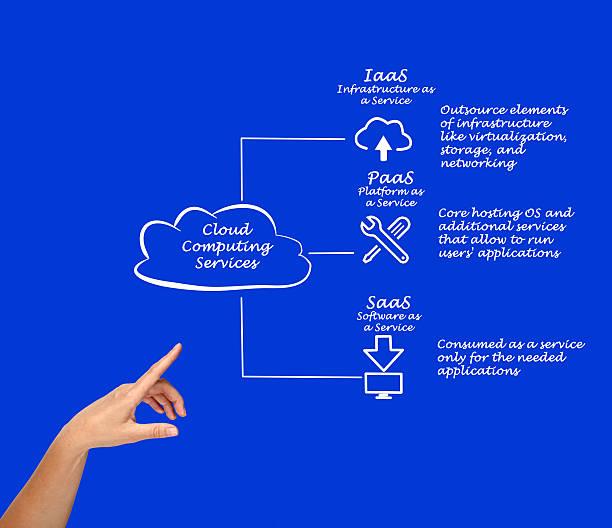
Cloud computing is the infrastructure backbone of the modern digital economy, yet few universities provide students with hands-on sandbox accounts to practice building real setups. Konentra’s Cloud Engineer Track corrects this omission by focusing deeply on cloud infrastructure, virtual environments, scalability concepts, and systems monitoring.
Following AWS Cloud Training and Google Cloud Digital Leader frameworks, our learners spend their time actively provisioning virtual machines, setting up secure subnets, configuring firewalls, and implementing automated load balancers to optimize enterprise performance. You step out of our program with a functional cloud portfolio that proves you can build resilient, cost-effective infrastructure.
3. The Data & Research Analyst Track: Mastering Enterprise Storytelling
Many university analytics courses are heavy on mathematics but completely omit the art of business intelligence. Konentra’s Data & Research Analyst Track prepares you for the CompTIA Data+ certification while focusing intensely on data interpretation, analytical reporting, and business intelligence concepts.
We don't hand you perfect spreadsheets; we give you messy, fragmented, and realistic datasets. You practice data cleaning, exploratory analysis, and structural reporting. The centerpiece of your training is learning how to design interactive visual dashboards that convert complex raw numbers into clear, actionable advice for corporate decision-makers.
4. The IT Project Management Track: Developing Operational Leadership
If you want to enter the tech sector through coordination, strategic planning, and operational management, this track is your ultimate competitive advantage. While computer science programs completely ignore the mechanics of project delivery, Konentra’s IT Project Management Track focuses intensely on project coordination, documentation, lifecycle management, and agile workflow management.
Learners gain real-world exposure structuring project charters, setting up sprint backlogs, tracking resources, and facilitating cross-functional team communication. You leave this track with an exceptional operational portfolio that proves you possess the corporate maturity required to keep complex digital initiatives moving forward on time and within scope.
The Interview Transformation: Speaking Like a Working Professional
The true test of a post-graduate polishing school happens during the technical interview process. When a traditional graduate sits down in front of a hiring manager, their answers tend to sound like a textbook recital: “The definition of an auto-scaling group is... The definition of a brute force attack is...”
When a Konentra graduate interviews, the conversation changes completely. Because you have spent months inside high-fidelity job simulations under professional supervision, you possess the professional vocabulary, the diagnostic intuition, and the unshakeable confidence of someone who has already been working in the trenches.
You don't just tell an employer you have a degree; you walk them through your Technical Portfolio—a living, public-facing repository of the enterprise-level case studies you completed during your Konentra training. You show them your cloud architecture designs, your interactive data dashboards, your incident response logs, or your agile project project charters. You prove your value through your work, effectively bypassing traditional entry-level experience requirements by presenting undeniable evidence of your competence.
Finish your Education. Launch Your Career.
A university degree is a wonderful milestone, but in the modern, fast-moving technology sector, it is merely the first half of your educational journey. To stand out in a hyper-competitive global job market, you cannot rely solely on your diploma to open doors. You must complement your academic credentials with practical exposure, hands-on tool mastery, exceptional documentation habits, and real-world workplace readiness.
Do not let the limitations of a traditional curriculum keep you stuck in endless loops of automated job rejections. Take control of your career development, fill the gaps left by your university classes, and convert your theoretical knowledge into true job-ready excellence.
Step Into Your Digital Future with Konentra Solutions
Are you ready to add the crucial practical polishing layer to your degree and build a career that stands out to top corporate recruiters? Join Konentra Solutions today and secure your placement in an upcoming experiential learning cohort. Choose the specialized, hands-on path that maps to your highest professional goals:
- Defend Corporate Networks: Enroll in our Cybersecurity Analyst Track to master threat analysis, security monitoring, and professional incident response documentation.
- Engineer Cloud Deployments: Join our Cloud Engineer Track to gain direct, hands-on exposure to virtual environments, cloud operations, and scalable infrastructure management.
- Drive Big Data Strategies: Step into our Data & Research Analyst Track to specialize in data interpretation, advanced data cleaning, and high-impact interactive visual reporting.
- Lead Complex Technical Teams: Join our IT Project Management Track to develop professional experience in technical documentation, project coordination, and agile workflow management.
Visit Konentra Solutions Today to explore our industry-aligned training pathways, learn more about our job-simulation model, and speak with a dedicated career readiness advisor. Stop relying on paper credentials alone—complete your education and build your proof of skill today.
Recent Insights


Student Reviews
Authentic experiences and reviews from our global training alumni will be displayed right here shortly.
Global Cohort
Advance From Foundation To Technical Leadership
Secure your specialized path tracker in Cyber Analytics, Data Science, or Cloud Systems Engineering.
Join Training Track